Biological and Chemical Control
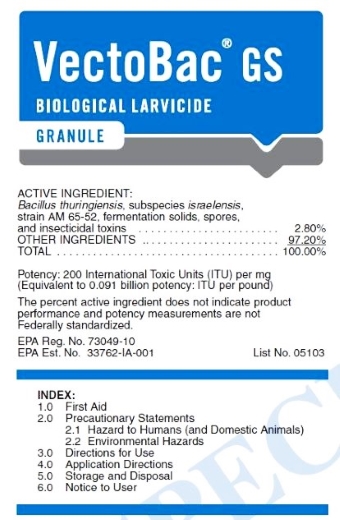
The MMAD frequently applies larvicides containing bacterial pathogens to kill mosquitos. Bacteria that kill mosquitoes include Bacillus thuringiensis israelensis (Bti), Bacillus sphaericus (Bs), and Saccharopolyspora spinosa (spinosad). All three are naturally occurring soil organisms that are commercially produced as mosquito larvicides.
Bs and Bti produce protein toxins that break down the gut of the mosquito. Both of these bacteria are extremely mosquito specific and do not affect other aquatic life. Spinosid produces bacterial neurotoxins that bind to nervous system receptors of the mosquito and cause involuntary muscle contractions and death.
Certain chemical compounds can be used to control either immature mosquitoes (larvicides) or mature mosquitoes (adulticides).
Methoprene is an insect growth regulator that mimics a natural juvenile hormone. When present in aquatic habitats, methoprene keeps immature insects from maturing into adults. Mosquitoes in the pupal stage are unable to develop into adults and die.
Mosquito Larvicide Oil (MLO) is a light, highly refined mineral oil that acts as a water surface agent. It is the only available product that is effective against late stage larvae and pupae. Mosquito larvae and pupae breathe air through tubes called siphons that extend above the water surface. MLO spreads across the surface of the water and prevents mosquitoes from breathing. The oil can kill other aquatic insects that directly breathe air at the surface of the water, such as water bugs and water beetles. "Gill breathers" such as dragonfly nymphs and fish are not significantly harmed by this oil. MLO degrades quickly in the environment.
Adulticides are rarely used in the Moab Mosquito Abatement District; nearly all of our mosquito control is accomplished by larviciding. The district will fog with adulticide ONLY if mosquito-borne disease is present, and ONLY in those areas where the disease-transmitting mosquitoes are in numbers high enough to be a significant risk to the public.
The application method for applying adulticides is with an ultra-low volume (ULV) spray. The material is atomized into small droplets and applied at a rate of 1 ounce or less per acre. The adulticide used for ULV spraying is pyrethrin. It is a naturally occurring compound isolated from chrysanthemums. Pyrethroids are a commonly used synthetic form of pyrethrin. Both degrade within 4 to 6 hours after spraying.
Pyrethrins bind to the voltage-gated sodium channel in nerve cells, causing them to stay open, resulting in repeated and extended nerve firings. This hyperexcitation causes the death of the insect due to loss of motor coordination and paralysis.
