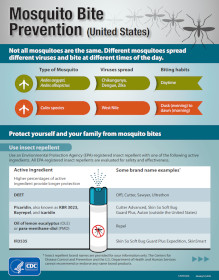
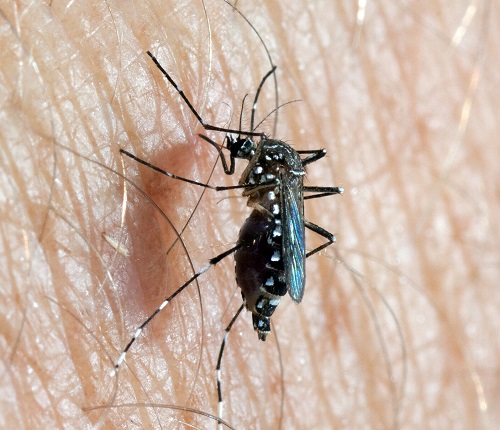
Aedes aegypti is known as an urban container mosquito that feeds almost exclusively on humans and can breed successfully in yards such as those found in Moab. It will bite at any time of day. These pesky mosquitos enjoy feasting on ankles, wrists, and areas of thin skin. Aedes aegypti are capable of transmitting viruses such as chikungunya, dengue, yellow fever, and Zika.
The mosquito is black with white banding and is relatively small. Their flight range is estimated at 100yds (in a lifetime). The eggs of Aedes aegypti last for long periods of time once they are laid on backyard clutter near water sources and will hatch when water is reintroduced to that site. During the hot Summer months, eggs may hatch and reach adulthood in as little as 4-5 days.
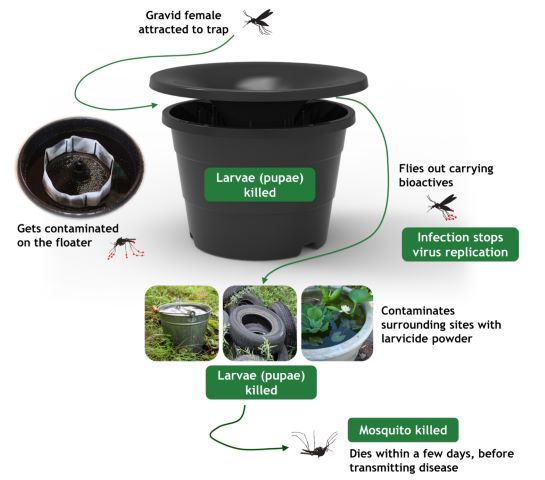
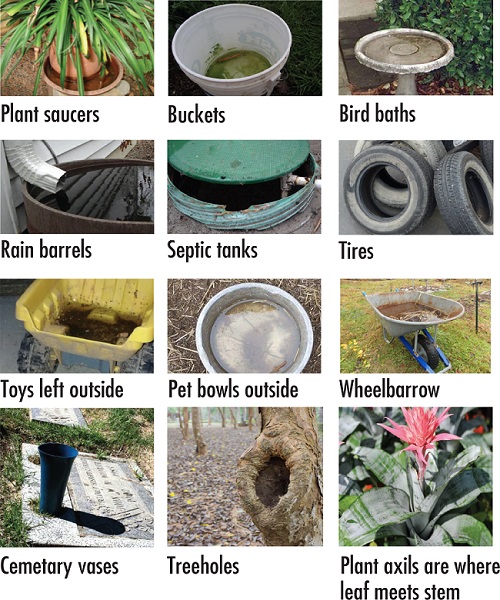
Due to the biology and behavior of this mosquito, pesticide applications such as fogging may be used but the best way of combatting the Aedes aegypti mosquito is to eliminate backyard breeding sources. Breeding sources can include bird baths, vases, soda cans, tires, buckets, etc. Breeding source reduction can be done by removing backyard clutter, trimming overgrown foliage, and draining standing water.
If you have experienced DAY BITING mosquitoes, please contact the Moab Mosquito Abatement District office at 435-259-7161.
Protecting Moab from the dangers of mosquito-borne disease is a community effort. Join us. Protect Moab and Fight the Bite. Together!
CDC Information on Aedes Mosquitoes
CDPH Mosquitoes and Mosquito-Borne Diseases
Invasive Mosquito Species (Coachella Valley MVCD)